The Year
L’ANNÉE means “the year”. And oysters keep a calendar.
Twelve months
-
JanvierJanuary
Month with an R NowGalette des Rois
On 6 January, France cuts the king cake: whoever finds the bean wears the crown. And the oysters? At their best: cold water, firm flesh.
-
FévrierFebruary
Month with an R NowLemon season
Lemons from Menton and Sicily are at their juiciest. One drop is enough: an oyster should taste of the sea, not of lemon.
-
MarsMarch
Month with an R NowSaint-Jacques
Scallops from Brittany and Normandy are in season from October to May. Raw, with a little olive oil and fleur de sel: pure poetry.
-
AvrilApril
Month with an R NowThe last R
The last month with an R and the first with asparagus. Schwetzingen’s famous spears grow practically on our doorstep.
-
MaiMay
NowStrawberries & Lillet
No R, but strawberries: time for a Lillet tonic. Oysters stay on the menu; the old rule dates from before refrigeration.
-
JuinJune
NowFête de la Musique
On 21 June all of France makes music in the streets. We’ll take rosé in the courtyard and the longest evenings of the year.
-
JuilletJuly
Now14 Juillet
Bastille Day. Oysters are often “laiteuses” now: milkier and creamier. Some people love exactly that.
-
AoûtAugust
NowSardine summer
Peak sardine season on the Atlantic. Can’t make it to the sea? Open a tin: the best ones age like wine.
-
SeptembreSeptember
Month with an R NowThe first R
Oyster season begins. The water cools, the flesh firms up and turns briny. Welcome back.
-
OctobreOctober
Month with an R NowNachtwandel
When Jungbusch opens its courtyards for the Nachtwandel night walk, our gate is already open. Long evenings, candles, crémant.
-
NovembreNovember
Month with an R NowBeaujolais Nouveau
On the third Thursday of November, Beaujolais Nouveau arrives. Young, fruity, a good reason to raise a glass.
-
DécembreDecember
Month with an R NowRéveillon
In France, oysters and champagne belong to Christmas and New Year’s Eve. Nearly half of the year’s oysters are eaten over the holidays.
The R rule
They used to say: oysters only in months with an R, so from September to April. The reason was less about taste than about summer. Without refrigeration, oysters spoiled quickly on their way inland, and in summer they spawn.
Today oysters travel chilled and reach the bar within hours. In summer they often taste milkier and creamier, the French call them “laiteuses”. Firm, briny oysters, though, are still a winter thing.
The smaller the number, the bigger the oyster.
In France, oysters are graded by weight. Nº 3 is the classic apéritif oyster, Nº 2 one for the hungry.
- Nº 0 over 150 g
- Nº 1 121–150 g
- Nº 2 86–120 g
- Nº 3 66–85 g
- Nº 4 46–65 g
- Nº 5 30–45 g
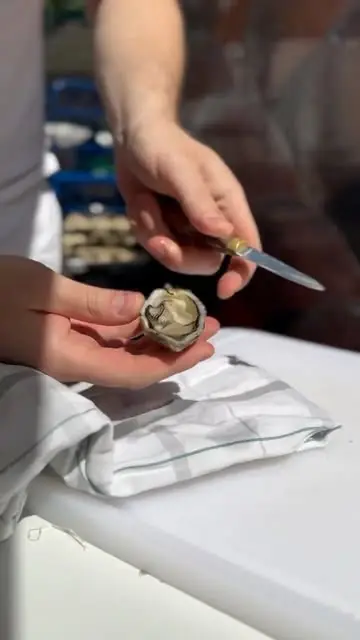
How to eat an oyster, in four steps
Look
A fresh oyster is plump, glistening and smells of the sea, never of fish.
Pour off the first water
Tip out the first liquor. After a minute or two the oyster makes more, and it tastes rounder.
Loosen and season
Loosen the muscle with the little fork. A drop of lemon or mignonette, or simply nothing.
Chew
Don’t just swallow: chew two or three times and the salt, nut and sweetness come through. Finish with the juice.
What to drink
Muscadet
Saline and lean. The classic with a Fines de Claire.
Chablis
Chalky and mineral, for big, meaty oysters.
Picpoul de Pinet
Grown right by the oyster beds of the Étang de Thau.
Crémant & champagne
The bubbles refresh the palate for the next oyster.